Author Talk: May 28, 2026
When a husband’s lies are no longer a secret and manipulation passes for love, a wife must decide how far she’s willing to go to expose the man she married --- and what justice truly means --- in Emily Lynn Paulson’s debut thriller, THE REVENGE PARTY. In this interview, Paulson talks about what inspired her to write her first novel, the research she conducted, the character she connects with the most, and what she hopes readers will take away from the book.
Question: What inspired you to write THE REVENGE PARTY?
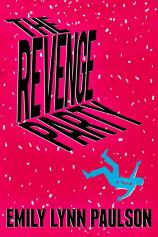
Emily Lynn Paulson: Several things. The first nudge was from my best friend (the Claudia/Katherine relationship has many parallels with our friendship), who had a toxic spouse and suggested that some of his shenanigans might make for a good thriller. Second, I survived as a woman in America from 2024 to 2026 and felt deeply inspired to write something that involved men being held accountable for once. Lastly, one of my daughters was in a theatrical production of Mean Girls her senior year, and I couldn't get “Revenge Party” out of my head for months. That's where the title and the inspiration for the color scheme came from.
Q: You’ve previously written the nonfiction titles HIGHLIGHT REAL: Finding Honesty and Recovery Beyond the Filtered Life and HEY, HUN: Sales, Sisterhood, Supremacy, and the Other Lies Behind Multilevel Marketing. Why did you decide to make the switch to fiction?
ELP: I was tired of writing about myself! I love writing, but I wanted to explore the space where I could use my imagination. Though in doing so, I found I could still write about personal things in a fictional way, like working through my frustration about the wellness industry, or highlighting how women are victimized by patriarchy and internalized misogyny, and even my own experiences in complicated mother/child relationships.
Q: THE REVENGE PARTY is full of niche details about politics and financial and legal processes. Tell us a little about how you conducted research for the book.
ELP: The same way I did research for my first two books: reading and listening to many professionals and other people with lived experience. I based it in Seattle because that is where I lived in the early years of COVID, and I saw firsthand how politics shaped health choices and educational choices around that time. The school board scenes, the book banning debates, the way a PAC can funnel money through a supplement company to a parent coalition: those came from real things I read in headlines and watched happen in communities around me. I also needed to understand nonprofit fraud, how NDAs silence victims, and what it actually looks like when someone drains your bank accounts overnight. Katie staring at zeroes on her phone in the salon parking lot? That kind of financial abuse is more common than people think.
Q: How did your background as an MLM whistleblower and an influencer go into the writing of this book?
ELP: It was immensely helpful. During my time in an MLM, I was swimming in a sea of people who used fear and loaded language to sell things. The themes of book banning and Big Pharma demonization, for example, capitalize on the same tactics. It is easy to scare people, but much more difficult to unscare them, no matter how factual or fictional the information is. Melinda Anderson came directly from watching how MLM leaders operate. She's running a supplement company, pushing curriculum changes, and she honestly believes she's protecting children, which is precisely what makes her dangerous. She exercised empowerment while a man pulled her strings, and she was the one who paid the price.
Q: Why did you decide to include the wellness plot thread in a book about abuse of political power?
ELP: Because it's relatable. If you look at cultural trends nationwide, the MAHA movement pulled many centrist and left-leaning women into its web with the promise of healthy kids and healthy food, even though the data surrounding any changes the organization made were murky at best. Movements like these ignore socioeconomics and are rooted in white evangelical supremacy. But “make America healthy again” sounds sexier. Nancy is swapping out heart medication for supplements, and Shane is leaning into wellness podcast culture to build a political brand. It’s the same playbook we see playing out on social media feeds with a “link in bio” and a flowery caption.
Q: Which of your characters do you connect with the most?
ELP: Claudia. I tried to distance myself from Izzy and Katie as much as possible so they wouldn't be “me,” though, of course, there are some zingers and personality traits you may recognize in either of them if you know me (Katie: obsessively organized, Izzy: sarcastic). But Claudia, as the snarky best friend on the sideline, helped me see the story and the characters from every angle. She's the one who declares herself Katie's friend based on a Facebook suggestion at the YMCA childcare and never lets go, and that’s something I did in real life with my best friend. She's the one who yelled out of turn at the school board meeting, which (allegedly) may have been something I’ve done. Writing her was pure joy.
Q: Why did you choose to write this book with a dual POV rather than just choosing one POV from Katherine or Isabella?
ELP: I felt that it was really important to show the impact of politics, social determinants of health, and intergenerational trauma from two different generations. Even the youngest and most empowered women are still at a disadvantage when society helps protect powerful men. Also, I wanted to show the power of autonomy and choice. The book isn’t anti-man or anti-relationships with men, and I tried to highlight that in both women’s decisions about marriage. Neither is the “right” answer. That mattered to me.
Q: What books, movies or TV shows inspire you as a writer?
ELP: I love thrillers, which is why my first stab at fiction was a thriller. Sarah Pekkanen, B. A. Paris and Kaira Rouda are a few of my favorite writers in that genre. I also love movies and TV shows that show female autonomy and vulnerability. “Dying for Sex” is one of the shows I've watched numerous times, because of the beautiful way it interweaves trauma, friendship and illness, yet it is so beautiful. That mix of heaviness and heart is what I wanted for Katie and Izzy. They start as strangers who have nothing in common except the same man. By the end, they're on a porch swing holding hands, having been through something neither of them could have survived alone.
Q: What do you hope readers take away from THE REVENGE PARTY?
ELP: I hope readers walk away thinking about the systems that protect powerful men and the cost women pay to dismantle them. I want them to feel angry! Not at the characters, but at how familiar it all feels. But beyond that, I hope they see the beauty in imperfect choices: Katherine choosing to break a cycle of intergenerational trauma even when it's terrifying; Isabella choosing love and family on her own terms; and two women from different generations finding solidarity rather than competition.
The book doesn't offer clean, morally tidy resolutions, and that's intentional. I want readers to sit with the discomfort of asking themselves what they would have done, and to question why women are so often forced into impossible positions in the first place. I hope it starts a conversation about how movements disguised as wellness and family values can be weaponized against the very families they hope to protect.
Q: Without giving anything away, did you know how the book was going to end when you started writing it?
ELP: I did not!