Excerpt
Excerpt
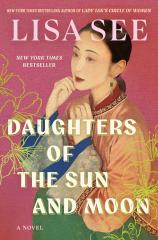
Daughters of the Sun and Moon



WORTHLESS GIRL (PETAL)
A Go-Away Child
The 3rd to 17th day of the 5th month in the 9th year of the Tung Chee emperor’s reign
(June 1–14, 1870)
“Worthless Girl,” Mama says, addressing me by the nickname my parents gave me when I came into the world, “every creature of our sex is born a go-away child.” She puts a hand on my cheek. “Daughters, without exception, are goods on which families lose. You and your sisters have proved this to be true. Still, you have always obeyed, and you’ve been gentle with your brothers and sisters.” She rarely praises me, and I lower my head in acknowledgment of this special moment. Now she lifts my chin with her fingertips. “Listen to your father, and don’t be afraid.”
“Come,” Baba says sharply. “I want to get to the port in Rice City, sell our vegetables, and return home before dark—”
“I wish I had something to give you for good luck,” Mama says to me, ignoring Baba. When she blinks back tears, I know she’s remembering the gold earrings she received upon marriage that she had to pawn years ago so Baba could buy rice seed, only to watch the crop fail during the drought. I may be worthless, but Baba says I have the gift of growing. We’ve survived on the shrunken and deformed cabbages, green onions, and snow peas I’ve helped to eke out of our kitchen garden. We had hoped to yield seeds from this year’s meager crop, but a howling wind blew them away a few nights ago. Our hope now is to sell our tiny harvest and use the money to purchase seeds. Baba says he already has a buyer—a cook on a ship.
I smile at Mama. “I don’t need anything. I will be home by nightfall with a story to tell the little ones.”
I turn away, slip my arms through the straps of a basket filled with the vegetables we picked before dawn, and heft the load onto my back. My father sets out and I follow. At the end of the lane, I stop, turn, and wave to my mother and siblings. Mama brushes at her eyes, running the backs of her fingers up her forehead and smoothing her hair. My brothers and sisters stand together in a little group. Those old enough to understand what’s happening are happy for me to have this adventure. Third Sister has our baby brother strapped to her back. My first brother, Ah Loo, is barely thirteen—five years younger than I am. We have always been close, because we’ve shared the responsibilities of caring for our siblings and doing chores. Ah Loo holds our second brother, who recently reached three years, by the hand. I said goodbye to Second Sister earlier this morning. Right now she’s on the pallet we share for sleeping. She has the wasting disease and will be in the same place when I return tonight.
I hurry to catch up to Baba as he scurries through Moon Pond Village. My world is small—our house of two rooms and an outdoor kitchen, our three mou of land, and our home village of around seventy people, all of whom I’m related to. We share more than blood. We are all poor, and we are all hungry. “Farmers should never have empty stomachs,” Baba often says, “and yet here we are.” The lack of rain these past years has made growing anything difficult, but it’s been particularly brutal for cultivating rice. I am thin. Some might even say I’m underdeveloped for my age. I look more like I’m fourteen than the eighteen years I have. I was born in the Year of the Black Water Rat, which means I’m recognized for my diligence, craftiness, and thrift—all good qualities for a wife—and yet I have not been married out. We’ve had few weddings between our village and neighboring villages these past years. No one wants to marry in another mouth to feed. I am not the only Worthless Girl in our county.
After we pass the last building, we edge around the pond for which our village is named. It’s been empty of fish for several years now. We’ve also harvested and eaten every last strand of algae. And, of course, the water level has dropped so low that I can see the muddy bottom. As soon as we leave the pond behind, Baba’s pace quickens, his bare, calloused feet nimbly trotting along the narrow dirt path that divides the dried-out rice paddies. I too am barefoot, sure in my steps, lightly navigating the packed strip of earth.
We’re in the fifth lunar month. Spring, when the poplars send their bothersome white balls of fluff in every direction, is fully behind us. The air is hot. The sky above me is gray and heavy with humidity. Sweat drips down the back of my neck and seeps into my tunic, but I don’t complain. This is the Year of the Horse. The Horse always features in myths and fables because it transports heroes and heroines. The Year of the Horse celebrates power and freedom. I’m living that right now! To have the opportunity to visit Rice City is a great gift—one I hope Baba will give me again.
It’s not long before we’ve gone farther from home than I’ve ever been, so I can’t compare what I’m seeing with anything beyond what I already know, which is almost nothing. Some fields look worse than the ones around Moon Pond. Some look about the same. To see another village for the first time, and then another, and another? Whether bigger or smaller than Moon Pond, they all have something in common. Each village looks starved. Thatched roofs sag. No sounds come from ducks or chickens, let alone pigs, because none remain. No smoke swirls up from cooking fires, because there’s nothing to cook. No children laugh, giggle, or sing, because these activities require too much energy. All this I recognize, because I remember when I was a little girl and life was different.
When we reach the outskirts of Rice City, my eyes struggle to take in what I’m seeing. So many buildings and humans are packed together that it feels like all the stones and people of Moon Pond have gathered in the village square for a festival. Except this is what Rice City looks like block after block. When Baba has told us stories of coming here, I’ve listened with half an ear, because they’ve seemed not just an exaggeration but wholly made-up. He’s spoken of gweilo—white ghosts—with alabaster skin and hair in the demon colors of yellow, brown, and red. But now here they are. Real, and as ugly and scary as Baba said. The foreigners wear clothes, shoes or boots, and hats made from materials and in styles I don’t recognize. The men have bushy hair growing out of their faces. Disgusting. Many of the gweilo ride in rickshaws. Baba’s told us about these too. I’d thought he was teasing us with yet another make-believe story. But men—barefoot and skinny, like Baba and me—pull rickshaws with a gweilo man or woman, or sometimes both, sitting in them. My heart empties, realizing the pullers have it even worse than our long-dead water buffalo who Baba used to drag rocks from our land.
None of my dreams or Baba’s stories have prepared me for seeing the river and docks. Small sampans with their single rowers bob in the water, but there are also ships and junks of all sizes being loaded and unloaded of cargo and people. Baba stops several times to ask strangers for directions to the boat with the cook who promised to buy our produce. We wend our way through the crowds and activity. When we find the boat, there’s enough noise and commotion that I can’t hear what Baba says to the man who stands by the narrow wooden bridge that leads up to the deck. Baba nods and motions to me. I follow him across the little bridge and onto the deck. An old woman approaches.
“You may address me as Auntie,” she says. “Are you hungry? Have you eaten?” Before either of us can answer, she leads us to a small table with some overturned crates set like stools around it. “Sit,” she orders, and we obey. Even though the ship is tied to the dock, I feel gentle swaying caused by the water beneath us. Behind the old woman is another table topped with big vats of food—probably to feed the crew. My mouth waters at the aromas of rice, soy sauce, garlic, and ginger. The auntie pours tea into heavy earthenware cups. “Before the sale,” she says, “you both need to sign papers.”
This seems peculiar, since neither my father nor I knows how to read or write, but Baba nods as though he does this all the time. The auntie places two pieces of paper on the table and regards them with all the seriousness of a scholar studying for the imperial exams. Things are written on the papers, but even I recognize they aren’t Chinese characters. She pulls one of the sheets closer to her. At the bottom is a blank area with a line drawn across it.
“What name should I use?” she asks.
“We call her Worthless Girl,” Baba answers, “but the name recorded in the ancestral temple is Sing Ye.”
This is all so strange, but the delicious smells coming from the food table distract me. My stomach growls so loudly that the old woman laughs. Blood rushes to my face, and I put a hand on my belly, trying but failing to quiet it. I shouldn’t be so embarrassed, because the auntie has already turned her attention to a new activity. She pulls out a brush, dips it in ink, and brings it to the empty space on the paper above the line. Ink begins to travel across the page. Again, these are not Chinese characters, which may have many strokes, but each individual word would fit into a tidy square. Instead, what she writes comes out in a long trail from left to right, all connected, like a snake slithering across sand. She creates these flowing designs, each with a flourish at the end, on both sheets of paper. She examines her work, nods to herself, and sets the brush aside. Then she slides the papers across the table so that one is in front of me and the other is before my father. I glance at him out of the corner of my eye, but he turns his gaze away, looking over the bow of the boat to the activities happening on the dock.
“It’s all simple,” she says to Baba as she pours ink into a saucer. “It outlines exactly what the cook told you.”
Baba dips his thumb in the ink and then presses it on the paper. When he’s done, he gestures for me to do the same. After I’ve made my mark, the auntie says, “Give me your hands.” I do as I’m told and watch and listen in astonishment as she counts out silver coins into my cupped palms. I’ve never seen so much money in my life.
“That makes forty Mexican dollars,” she explains. “Now give them to your baba for safekeeping.”
I’m more than happy to do that, because I don’t want the responsibility of carrying such a fortune. What if I lost it?
Baba receives the coins and slips them into his pockets. Then he silently stands, picks up the piece of paper with his thumbprint, folds it, and tucks it in his tunic against his chest.
“Go along now,” the old woman says to him. “Take your baskets to the cook.” She pats my hand. “Your daughter can stay with me. I’ll give her something to eat. When you return, your bowl will be ready.”
After slinging his basket onto his shoulders, he picks up the one I brought and props it on his hip like he’s carrying one of my siblings. He reaches down and squeezes my shoulder. “I’ll be right back.”
But I barely pay attention, because the auntie has opened one of the food vats. She fills a bowl with steaming rice and tops it with stir-fried vegetables. She slides it and a pair of chopsticks across the table to me with the same ease and hospitality that she did the papers and ink.
“Eat.”
I don’t need her encouragement. The first bite tells me this isn’t merely vegetables and rice. There are slivers of pork too. I haven’t tasted meat in too many months to count. I force myself to slow down, chew, enjoy. I’m trying to memorize every detail so I can tell my sisters and brothers about what I’ve seen and done when from somewhere out of sight comes a deep vibration that pulses through the boat. I startle, frightened.
“Baba?” I look around, realizing he should have returned by now. To my right, the buildings are moving. Only they aren’t moving. It’s the boat that’s moving. I stand so quickly that I tip over my bowl. “Baba,” I call.
I take a step, but the auntie grabs my wrist. I try to shake away, but she’s surprisingly strong.
“Baba!” I scream.
The old woman’s grip tightens. She gestures to a couple of men on the deck. “If you fight,” she rasps, all traces of the kindly auntie gone, “things will become difficult for you very fast. It’s best if you go belowdecks. It’s better not to see what you’re leaving behind.”
The boat is in the middle of the river. Even if I could evade the men, I can’t jump overboard because I don’t know how to swim. And even if I did, there’s so much river traffic, I’d probably be hit by a boat or ship.
The men reach us. The auntie releases me, and each man takes one of my arms. She picks up the piece of paper with my thumbprint, folds it, and shoves it into one of my pockets.
“Don’t lose this,” she says. “It explains everything. Your father has sold you to the Hip Yee Tong. You belong to them now. You are going to Gold Mountain—America. You have a whole new life ahead of you.”
Before I can respond or ask questions, the men steer me across the deck like I’m a prisoner, through a door, and down some stairs. Another door is opened, and I’m pushed inside.
“We’ll come back for you when we reach Hong Kong,” one of the men says gruffly, and then he shuts and locks the door.
I edge backward until I hit a wall. I slide to the floor. I begin to sob—in fear, in anger, in disappointment. These feelings are not directed at Mama and Baba, who must have planned this together. No, my emotions are aimed like arrows straight at my heart. I let the idea of an adventure with my father blind me to the meaning behind what I was seeing and experiencing—Mama’s unusual praise, my brothers and sisters brought together to say goodbye, Mama wiping her eyes when Baba and I walked away. Then, once I boarded the boat, I allowed the lure of food to trick me into not paying attention to what was happening around me. Now I try to make sense of what the auntie said: I have been sold to something named the Hip Yee Tong, which means nothing to me, and I am going to Gold Mountain—a place to which some men in our village have gone and never returned. A feeling of panic overwhelms me. Will I be able to escape? Will I ever see my family again?
A few hours later, the two men come to retrieve me. They haul me to the deck. We’re in a port much larger than the one in Rice City. The dock is busier too, and the ships make this boat seem small. The old woman is nowhere to be seen. One of the men ties a rope around my neck. “In case you think about running away,” he warns. I’m led off the boat and through swarms of people and stacks of baggage and crates of goods. And the noise! The grinding of ship engines. Men yelling orders in languages I don’t understand. Vendors shouting about their wares. The sound of rickshaw, wagon, and buggy wheels against cobblestones. Even if I didn’t have the rope around my neck and muscled men gripping my arms, I’d be too frightened to break free.
We come to a huge ship, with a black chimney coughing smoke, three masts, and a round thing on the side that one of the men tells me is called a paddle wheel. A narrow wooden bridge leads to a high deck; another goes to a lower deck. The two men lead me across the bottom bridge to an area cordoned off with ropes. Inside, a group of girls—some around my age, a handful a bit older, and a few still little things—huddle together. Many of them cry. Garbled words come through the sounds of weeping, the internal rumblings of the ship, and all the noise from the dock.
“Mama . . .”
“Help . . .”
“Why?”
“Take me home.”
The rope is removed from my neck, and I’m pushed into the holding area. The two men leave. The sun beats down. From the deck above us, white ghosts dressed in their strange clothes lean on railings and stare down at us like we’re newborn piglets in a pen.
A guard climbs on a crate and motions for us to be quiet. “We’re waiting for a few more of you to arrive, and then we’ll depart. The voyage will take thirty-three days, if we have good weather. We will stop in Okinawa and Honolulu before we reach San Francisco. I tell you these things so you don’t pester the crew with questions. You will not be getting off the ship, nor will you be allowed on deck.”
His words mean almost nothing to me. I’m not the only one to be confused, as proven by the wails of fear rising up around me. One of the little girls comes to stand next to me. She gulps big heaving breaths through her sobs. She can’t be more than six, maybe seven years old. I don’t know how to comfort her when I’m doing everything I can to hold in my own emotions.
It’s not long before a group of about fifty girls and young women are brought on board and join us. Some carry bundles with bedding and what I presume to be clothes and toiletries. It’s then I realize I have nothing—not even a tooth scraper. My despair deepens. How could Mama and Baba have not considered what I might need?
I’m about to succumb to tears when the oddest sight yet comes into view. It’s a girl my age, maybe a bit younger. She’s accompanied by a Chinese man who wears the strange attire of the gweilo, the white ghosts. Together they slowly cross the little bridge to the higher deck. She’s dressed in green silk embroidered with white butterflies. Her hair is pulled tight across her head, glossed with oil, and pinned into a bun. She has bound feet. They are so tiny they look like my baby brother’s feet. Her hands are tucked in her opposite sleeves, so the only flesh I see is the skin of her cheeks, which is as pale as the moon. She does not look panicked. She’s not crying. She seems fully at ease, maybe even happy. When she reaches the upper deck, she pauses. She smiles as her eyes sweep across what she must be able to see of the city from up there, and then she willingly follows a few paces behind the man until she disappears from sight.
A few minutes later, the guard shouts, “Come with me.” We’re poked and prodded by other men, who funnel us through a door. The little girl grabs hold of my tunic and follows behind me like a tail. We go down several sets of stairs and into a huge room filled with beds stacked in tiers of three—row after row of them. The room is dark—with no windows, a low ceiling, and lit by a few oil lamps. It’s even hotter down here than on the deck, and the air smells of vomit, urine, and feces. A wave of nausea washes over me.
“Find a bed and don’t complain,” the guard yells. “Meals will be brought every morning and evening. Have the honeypots by the door for removal at these times.” He pauses. The sounds of weeping echo off the walls. “You can cry or scream as loud as you want. No one will hear you. And even if they do, no one will care.”
With that, he leaves. Most of us are too confused and frightened to know what to do. When a few women choose their beds, the rest of us begin to move. Is it better to be on the bottom, middle, or top? I choose the middle. The little girl climbs onto the middle bed in the tier next to mine. She rolls onto her side and stares at me with dull eyes. No straw, matting, or quilts have been provided. I’m skinny, and my bones rub against the wooden slats. The bed above me is so close that my elbow remains bent when I reach up to touch it. The bed itself is so narrow that I barely fit on it. When I stretch my arms out to the sides, I can reach the beds to the left and right of me. Overall, I feel like I’m in a coffin.
After a half hour, another fifty or so women are brought into the room, followed later by another batch about the same size. Each woman or girl blinks, trying to accustom herself to the darkness. I see it again and again: eyes coming into focus, widening in shock as they take in the surroundings, and then a veil coming down to try to hide their terror, anger, or sorrow.
The ship starts to move. Not long after we leave the shelter of the port the ship begins to heave as it plows through the swells. I can’t imagine what’s happening outside or even what the open sea must look like. My stomach churns. I’m not the only one affected by the constant, unpredictable lurching. Women and girls run to the honeypots to throw up. I feel momentary relief when the meal the old auntie gave me leaves my stomach. That trickery is outside my body now, but it reminds me never to forget how I was taken in by what seemed like kindness. Soon enough, though, the tossing of the sea once again roils my stomach. What floats in the honeypot during my next visit makes me sicker still. The air reeks. It’s as though we’ve all died and been sent to the eighteenth level of hell. I weep. Why did Mama and Baba do this to me? The little girl on the bed across from mine lowers herself to the ground and climbs up next to me. She puts a hand on my cheek, much like Mama did this morning. The child’s fingers are hot, burning through my flesh, reminding me that I am still alive.
*
Two weeks have passed. Without windows, it’s hard to tell day from night, but the passage of time is set by the arrival of our meals. We are more than two hundred women and girls—some as young as five—who live together in this hold. We tell ourselves it must not be easy to cook for so many mouths, because the food is almost inedible. We receive watery jook in the morning, sometimes with pickled vegetables as flavoring. The rice porridge is easy going down and just as easy coming back up. At night, dinner is delivered in huge tubs—rice with overly cooked cabbage, which smells awful. Sometimes I see a chunk of meat with the hair still attached to it in my bowl. At first, I avoided these morsels, but now I eat them so I can remain strong.
We’re all filthy. The men who remove the honeypots and bring back the still-dirty empties are the same ones who bring buckets of salt water for us to use for washing. The first ten people to use a bucket are fortunate. After that, what’s the use? I stink. My hair hangs in strings. Even though I rub my teeth with the hem of my tunic and rinse with tea twice a day, my mouth feels foul. A week ago, my monthly moon water arrived. Auntie Lau, an old woman not unlike the one who handled my sale, who also works for the Hip Yee Tong, gave me some rags so I could take care of myself.
The next day, Auntie Lau announced she would be giving us new flower names, explaining, “You’re all familiar with the stories of the Four Great Beauties. I am reminded of Yang Kuei-fei, whose face made the flowers hide in embarrassment when she passed.” She paused to make sure we understood the insult. Then she went on. “But why would I want to shame you this way? I wouldn’t.” (Even though she just had.) “You will now live on Gold Mountain. What better way to start your new future than with a name that is beautiful and honors the new land?” She took one look at me and named me Petal. I wasn’t worth an entire flower, while there must be dozens of Lilies, Chrysanthemums, and Jasmines down here. Auntie Lau masquerades as our friend and advisor, but in actuality she’s a guard who makes sure we understand that we are interchangeable, that we—as merchandise—aren’t damaged during the voyage, and that we learn to accept our situation. I’ve learned that I’m traveling on the Pacific Mail Steamship Company’s Great Republic. I’ve learned that during a storm, I need to wedge myself in my bunk to keep from being tossed to the ground. I’ve learned many new words: steamship, hold, gangplank, crew members, bunks, California.
I’ve made friends with the women and girls who sleep in the bunks around mine. The worst of the weeping and seasickness has ended, at least for now. Still, we all long for home. Those who knew what was happening to them had the wherewithal to bring a small satchel of dirt from their home villages. When loneliness gets to be too much to bear, they mix a few grains of the soil in hot water and drink a bit of home. But at least half of us, including me, don’t have the benefits of this tonic, so we’re left to suffer.
Tonight, we cluster together on two of the lowest beds and on the narrow strip of floor between them to talk awhile before the lanterns are dimmed. The child who found me on the first horrible day sits next to me. Her name is Pearl, a pretty name that she’s been allowed to keep. She was sold by her parents to become a mooi-tsai—a little daughter-in-law, a servant. She rarely speaks.
“I hope my husband is handsome,” Lotus says. She’s been given this name because it symbolizes purity and fertility. “The auntie who negotiated my wedding contract with Baba said he is, but—”
“Why would you believe anything that woman said?” a girl newly named Poppy asks. She looks from face to face. “How many of us were told we were going to marry Gold Mountain men?”
A couple of girls tap their chests, acknowledging that they have also been promised this future.
We have variations of this conversation nightly. The only thing keeping the Great Republic from sinking from the weight of heartbreak are those women who still insist that happy futures lie ahead.
“I want to believe my father arranged a marriage for me,” Rose Blossom says. “But if that were true, then why did the old woman on the boat say I was now owned by the Hip Yee Tong?”
Lotus reaches into her pocket, pulls out a piece of paper, and unfolds it. “It says right here that I’m to be married.”
Poppy snorts. “You can’t read that. You have no idea what it says.”
“But the auntie said—”
“Whatever the auntie told you is probably a lie,” Poppy interrupts. “If we are all to be married to Gold Mountain men, then why didn’t our families rejoice with us? Where were the red envelopes? Why didn’t they put our dowries on the ship?”
“In my case, there was no money for a dowry,” I admit, a part of me wanting to believe a wedding is in my future.
“But did your family receive a bride price?” Poppy asks. “Did you see money and goods delivered to your parents as a thank-you for having fed and clothed a daughter until her marriage?”
We silently take this in. These are truths none of us can ignore.
“I wish I could do everything differently,” someone mutters.
“The wood has already become a boat,” Poppy recites. “There is no going back.” And then she laughs, realizing how accurate the aphorism is to our situation. No one joins her.
“You’ve heard my story already,” Jasmine says. “I willingly signed a contract. I wanted my family to have the money. Now they can eat. In a few years, I’ll return from the Gold Mountain in clothes of silk and brocade, with my pockets filled with gold.”
“You are so stupid,” someone on the bed opposite mine says with a sniff. “We have all heard the tales of men who, before we were born, went there in search of gold. They were supposed to come home rich. They didn’t. Then men went to work on the railroad. They were supposed to be away for a few years and then come home with pockets overflowing. That didn’t happen either. Many of them never returned at all. Stories are told of families that are lucky to receive the bones of their dead father, husband, or son.”
“No money,” Poppy adds. “No piles of gold. Just bones.”
I circle back to something Rose Blossom said earlier. “I was also told I’d been sold to the Hip Yee Tong.” A low chorus of “me toos” hums around me, even from beyond our little group. “But what is that?” I ask.
“I know the answer,” Chrysanthemum says with a sigh. Auntie Lau told us that the chrysanthemum is a symbol of autumn, friendship, and intellectual pursuits. I can’t tell if any of those attributes are accurate for this Chrysanthemum. “The tongs started in the Big City of San Francisco as benevolent associations. They helped our countrymen when they arrived to find lodging and jobs during the Gold Rush and later during the building of the railroad.”
“I heard they make loans to our countrymen who wish to open shops, laundries, or a place to eat a bowl of noodles,” someone chimes in.
“The tongs still do those things,” Chrysanthemum goes on, “but now many of them run gambling and opium dens. They also operate the bawdy houses where we’re being sent. They are nothing more than criminals.” “All that can’t be true,” Lotus mumbles.
Another woman takes a more strident approach. “How do you know so much?” she demands of Chrysanthemum.
Chrysanthemum’s voice fills with sadness as she answers. “When my baba sold me, he explicitly asked for what purpose. The auntie was blunt. The tong is going to rent me out to many men every day. I’m to become a lougeui—a woman always holding up her legs.”
No one wants to hear this. No one wants to believe it.
“Are you girls complaining again?” This comes from Auntie Lau, who’s arrived to make her rounds of the hold before bedtime. “Paah . . . It does no good.”
We’re taught to revere our elders, but I have no respect for Auntie Lau, and I don’t trust a word that comes out of her mouth.
“Truly, you are lucky,” Auntie Lau continues. “Not so long ago, ships like these carried haak gwei—black ghosts—across a different ocean to the Gold Mountain. When those men and women made the journey, they were chained for the entire crossing. No ships carry that cargo now. Instead they carry people like you.”
Every word from her mouth plants another stone in my belly. No matter what she says, we are not lucky.
Later, Pearl and I curl together on my bunk. I worry about what’s to become of her, become of me, become of each and every woman and girl on the ship. Aiya. Not every woman and girl. What about the white women in their long dresses and hats or that Chinese girl who boarded when I was still on the deck? We two could not be more different: I have big, bare feet that have never worn a pair of sandals, let alone shoes; that girl’s feet are bound and encased in tiny, embroidered slippers. I’m from the countryside, dark-skinned, and smelly from being unable to wash; somewhere above me, that girl is in her own room. She’s dressed in silk. She’s pale, clean, and perfumed.
I fall asleep to the rocking of the ship, the feel of Pearl’s breath on the back of my neck, and the sounds of women weeping and whispering as they try to comfort each other.
Copyright © 2026 Lisa See


Daughters of the Sun and Moon
- Genres: Fiction, Historical Fiction, Women's Fiction
- hardcover: 384 pages
- Publisher: Scribner
- ISBN-10: 1982117052
- ISBN-13: 9781982117054